
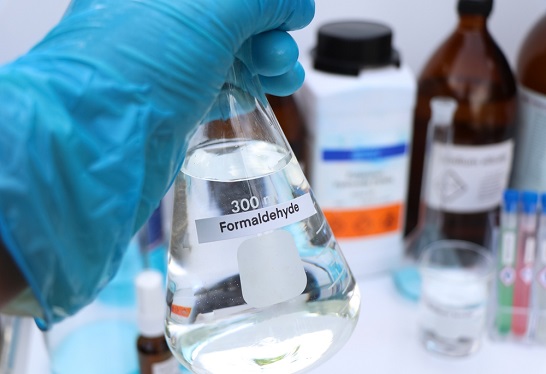
Formaldehyde (CH₂O)
Formaldehyde is a simple, colorless gas with a pungent odor used widely as an intermediate in chemical manufacture and as a building-block for resins, adhesives, and polymer products. It is an essential feedstock in the production of urea-formaldehyde and phenol-formaldehyde resins, which are used in coatings, laminates, and construction materials.
How It Is Produced
Industrial formaldehyde is commonly produced by catalytic oxidation of methanol. The resulting formaldehyde is condensed or stabilized (often as aqueous formalin) for transport and downstream processing.
Applications & Benefits
- Key raw material for resins and adhesives used in wood products and laminates.
- Used in textile finishing, disinfectants, and certain chemical syntheses.
- Enables manufacture of durable, high-performance construction and industrial materials.
Safety Note
Formaldehyde is toxic and an irritant; industrial handling requires strict controls, adequate ventilation, and personal protective equipment to meet regulatory safety standards.